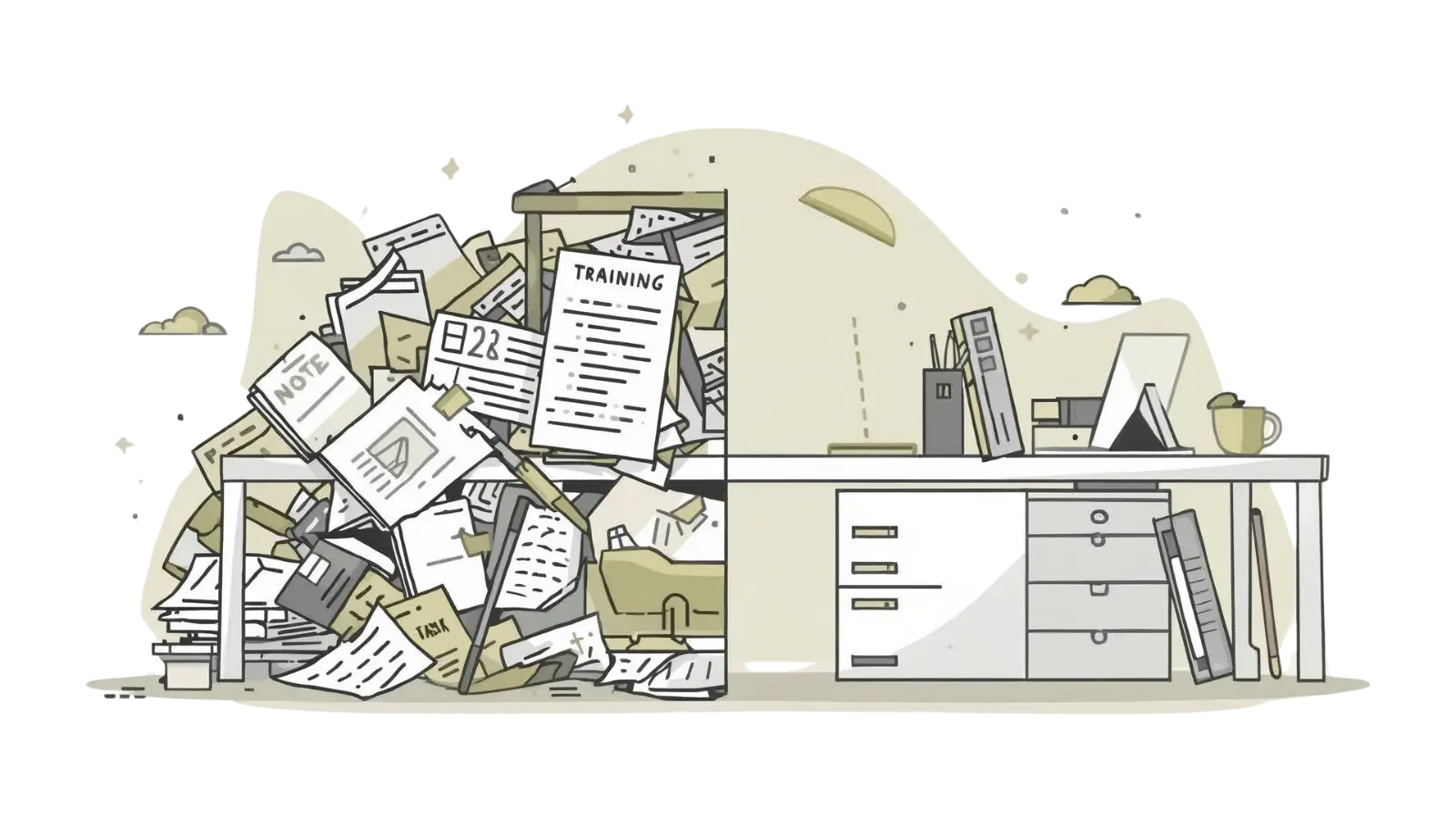

Most SMBs don’t struggle because of lack of effort—they struggle because training isn’t consistent. Learn the common gaps that hold teams back and the simple structure that makes training finally work.
You’re not imagining it — training is hard for small businesses.
Teams are busy, managers are stretched thin, and no one has time to document anything. The result? Inconsistent training, frustrated employees, and a lot of unnecessary rework.
The good news: Most SMB training challenges have simple fixes once you understand where the gaps are.
The Most Common Training Problems SMBs Face
1. Training Lives in People’s Heads
If your “training plan” is just a manager explaining things verbally, nothing is consistent. Employees get different instructions depending on who is teaching them.
2. No Clear Structure
Without a roadmap for the first week and first 90 days, new hires end up guessing what’s important.
3. Too Much Tribal Knowledge
Processes exist, but only certain team members know how to do them. If they’re sick or busy, training doesn’t happen.
4. Managers Aren’t Given Tools
Most managers were never trained to train. They want to help — but they were never given scripts, checklists, or talking points.
5. No Way to Track Progress
If you can’t see what a new hire has completed, you can’t coach effectively.
The Simple Fix: A Repeatable System
Training doesn’t need to be complicated. What it needs is structure.
A repeatable training system makes the entire experience smoother for everyone:
✔ New hires know exactly what they’re learning
✔ Managers know what to cover
✔ Leadership gets predictable results
✔ Performance becomes consistent
✔ Ramp time is shorter
✔ Retention improves
What That System Looks Like
1. A First Week Plan
Every new hire follows the same structure — day-by-day, task-by-task.
2. Employee-Facing Guide
A friendly handbook that explains expectations, workflows, communication norms, and where to go for help.
3. Manager Support Tools
Talking points, coaching notes, and checklists that make training easier.
4. Simple Tracking Tools
A progress dashboard or competency checklist that keeps everyone aligned.
5. Early Success Roadmap (30–60–90 Days)
Clear milestones keep new hires motivated and managers accountable.
Why This Works (Even for Very Small Teams)
Because consistency is more powerful than complexity.
Your business doesn’t need dozens of modules or a full LMS.
It needs a reliable, organized onboarding experience that every new hire can follow.
And once you build it once, you can use it forever.
Where CoreStart Fits In
CoreStart gives small businesses the exact structure they’re missing — without requiring them to build everything from scratch.
It includes:
- Pre-built templates
- Ready-to-use training guides
- Manager coaching tools
- A simple tracking system
- A roadmap for long-term success
It’s all designed to save time, reduce confusion, and help your team perform consistently.
If training feels chaotic, CoreStart can help bring clarity.