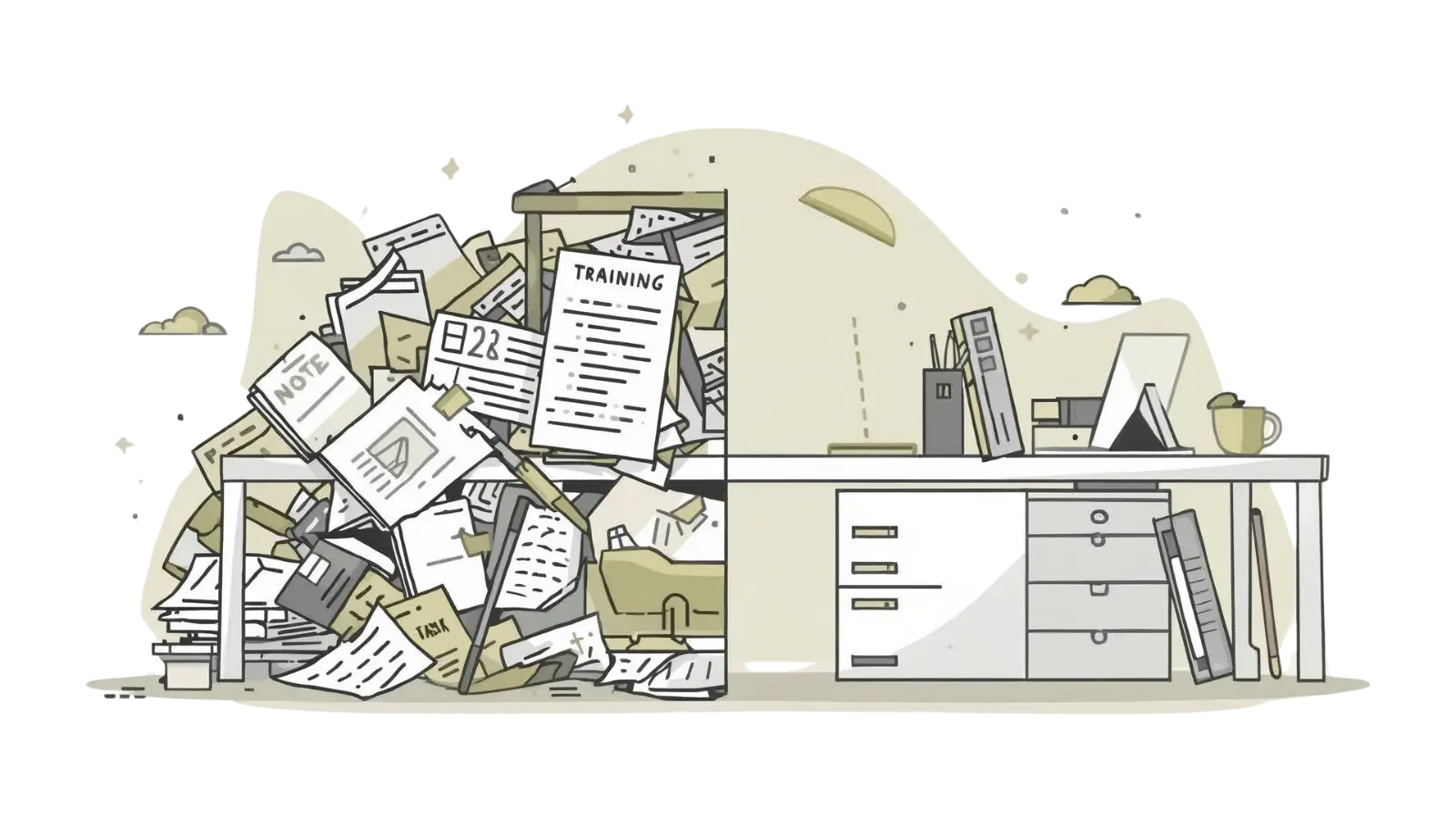
Most small and mid-sized businesses don’t realize how much poor onboarding is costing them. Not just in dollars, but in productivity, morale, and the time managers lose re-explaining the same information over and over. Industry data suggests the average cost to onboard a single employee is around $4,700, which doesn’t include the hidden expenses that pile up when training isn’t structured.
If your onboarding feels inconsistent, rushed, or “figure it out as you go,” you’re paying for it — whether you see the number on a spreadsheet or not.
The Hidden Costs SMBs Usually Miss
1. Time Lost to Repetition
Managers lose hours each week walking new hires through tasks that could easily be documented or standardized. When every new employee gets a slightly different version of the training, coaching becomes reactive instead of strategic.
2. Slow Ramp Time
If new hires don’t understand expectations, systems, or workflows, their productivity drags — and supervisors end up carrying the extra load.
3. Higher Turnover
People don’t leave jobs. They leave confusion, frustration, and uncertainty.
A disorganized first week is one of the most common reasons employees quit within 90 days.
4. Inconsistent Performance
When training varies by manager, shift, or day, you lose reliability.
Your customer experience changes. Your results fluctuate. And your business becomes harder to scale.
What Effective Onboarding Actually Solves
Structured onboarding doesn’t mean complicated. It means predictable, repeatable, and easy for both supervisors and new hires.
A strong system gives you:
- Faster ramp time
- Fewer mistakes
- Better performance patterns
- More confident new hires
- Managers who aren’t constantly playing catch-up
What to Fix First (Even If You Don’t Have an L&D Team)
1. Standardize Day 1–5
Your first week should not depend on who’s on shift or who’s available to train.
Outline a simple plan that covers:
- What to do each day
- What to learn
- When check-ins happen
- How progress is tracked
2. Create a New Hire Success Guide
Give employees a quick, friendly guide with expectations, workflows, FAQs, and where to find help.
3. Equip Managers with Talking Points
Managers train better when they know exactly what to say and when to say it.
4. Add Light Tracking Tools
You don’t need fancy software. Checklists and dashboards give everyone clarity.
How CoreStart Helps
CoreStart was designed specifically for small and mid-sized teams that need structured onboarding but don’t have the time (or budget) to build everything from scratch.
The Starter Edition gives businesses plug-and-play tools:
- First Week Training Plan
- New Hire Success Guide
- Manager Talking Points
- 90-Day Early Success Roadmap
- Tracking Tools
- Welcome Page Script
- Implementation Guide
It’s your training department in a box. All without the need to hire a training department.
If you want your onboarding process to finally work the way it should, CoreStart can help you get there faster.