A lot of onboarding problems get blamed on managers.
But in most companies, managers are not refusing to onboard people well.
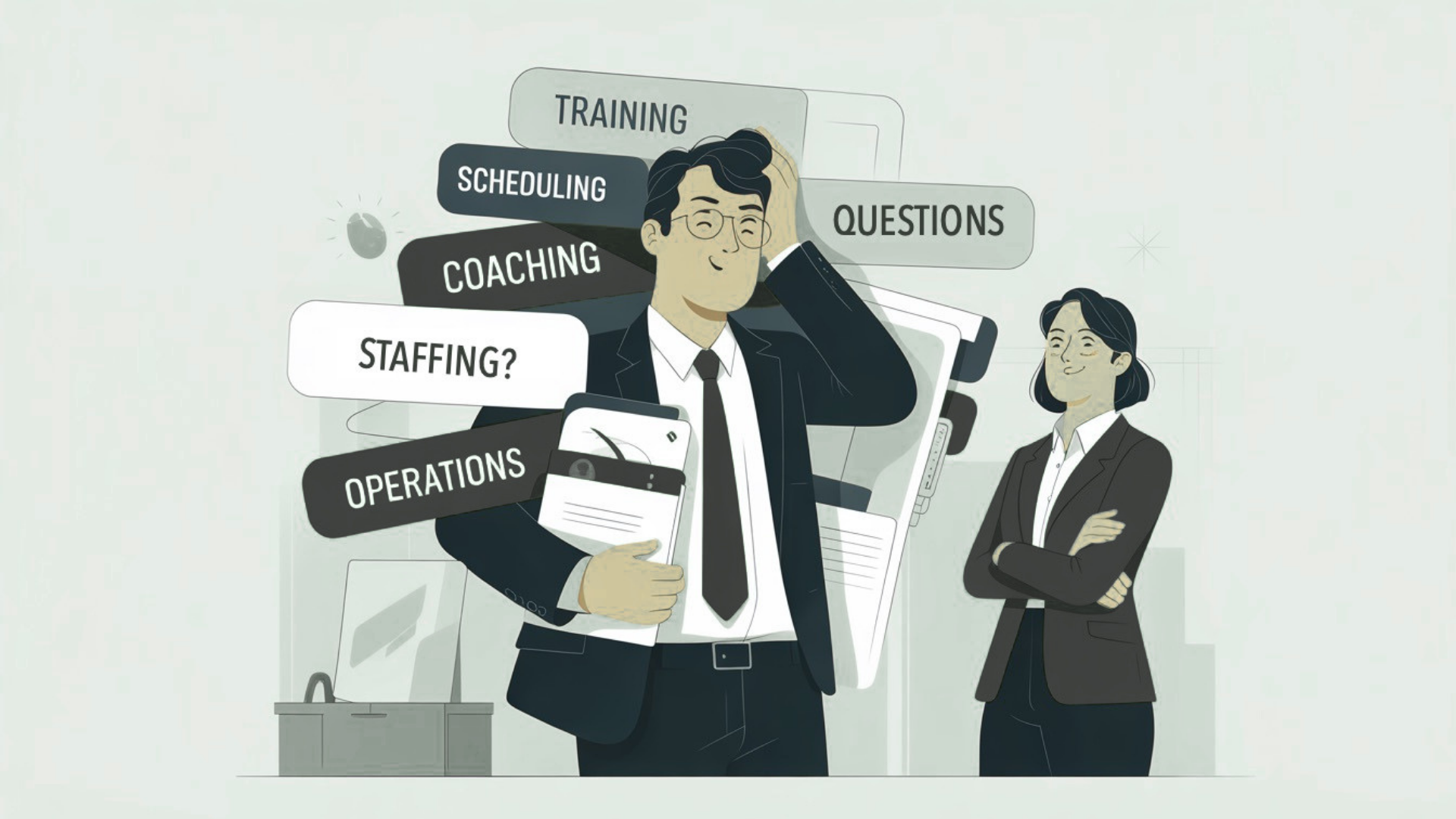
They are overloaded.
They are balancing daily operations, staffing issues, customer problems, meetings, deadlines, and constant interruptions. Then somewhere in the middle of all of that, they are also expected to train and support a new employee.
Most are doing the best they can with very little structure behind them.
The assumption companies make
Many organizations assume managers naturally know how to onboard someone successfully.
But being good at a job does not automatically mean someone knows how to guide another person through learning it.
And most managers were never given a clear onboarding process themselves.
So they rely on experience, memory, urgency, and whatever time they can find during the day.
What this looks like in real life
One manager spends time walking the new hire through things carefully.
Another rushes through training because they are short-staffed.
One employee gets regular follow-up conversations.
Another is left figuring things out alone after the first few days.
Not because anyone intentionally wants inconsistency.
But because there is no system creating consistency.
Managers are often missing the things they actually need
In many companies, managers are expected to onboard employees without:
• a structured onboarding process
• clear expectations for the first 30, 60, or 90 days
• visibility into progress
• coaching guidance
• defined training priorities
• a way to track readiness over time
So onboarding becomes reactive.
Managers answer questions as they come up.
Training happens when there is time.
Follow-up depends on how busy the week is.
Eventually, the entire onboarding experience becomes dependent on the manager’s personal style and availability instead of a repeatable process.
Why this matters
When onboarding lacks structure, everyone feels it.
Managers feel frustrated because they are constantly repeating themselves or putting out fires.
New hires feel uncertain because expectations are unclear.
Leadership sees inconsistent performance but cannot always pinpoint why some employees ramp up successfully while others struggle.
And often the conclusion is:
“We need better employees.”
“We need better managers.”
“We need more training.”
But many times, the real issue is much simpler than that.
The people responsible for onboarding were never properly supported in the first place.
What changes when managers have structure
When managers have a clear system to work from, onboarding becomes easier to lead and easier to repeat.
Expectations are clearer.
Training becomes more consistent.
Coaching conversations happen earlier.
Progress is easier to track.
Managers spend less time reacting and more time supporting development.
The goal is not to turn managers into trainers.
The goal is to give them enough structure that onboarding does not depend entirely on memory, personality, or available time.
The Bigger Issue
Most managers are not failing onboarding because they do not care.
They are trying to carry too much without enough operational support behind them.
That is why onboarding works better when it is treated like a system instead of a series of conversations and handoffs.
If your onboarding process depends heavily on individual managers “figuring it out,” it may be time to look at the structure behind it.
CoreStart Foundations was designed to help growing teams create a more consistent onboarding and learning process with practical tools, onboarding structure, manager guidance, and early performance tracking built in.